Cloud-Based Productivity and Collaboration Tools: 5 Types
Compare cloud-based productivity and collaboration tools, choose the right setup, and connect team deadlines with daily tasks, habits, and focus.

Practical guides, app tips, and ideas on habits and productivity.
Compare cloud-based productivity and collaboration tools, choose the right setup, and connect team deadlines with daily tasks, habits, and focus.

Use these personal goal setting examples to choose what matters, build a weekly plan, and track habits, tasks, and steady progress.
Use a free focus timer for work or study. Set work and break intervals, connect sessions to goals, and review daily and yearly progress.
Copy a free goal setting sheet with a clear goal, action steps, deadlines, and progress tracking. Includes a completed example and a weekly review.
Find productivity tools for tasks, habits, goals, and focus. Compare useful options, check free access, and build a simple weekly workflow.
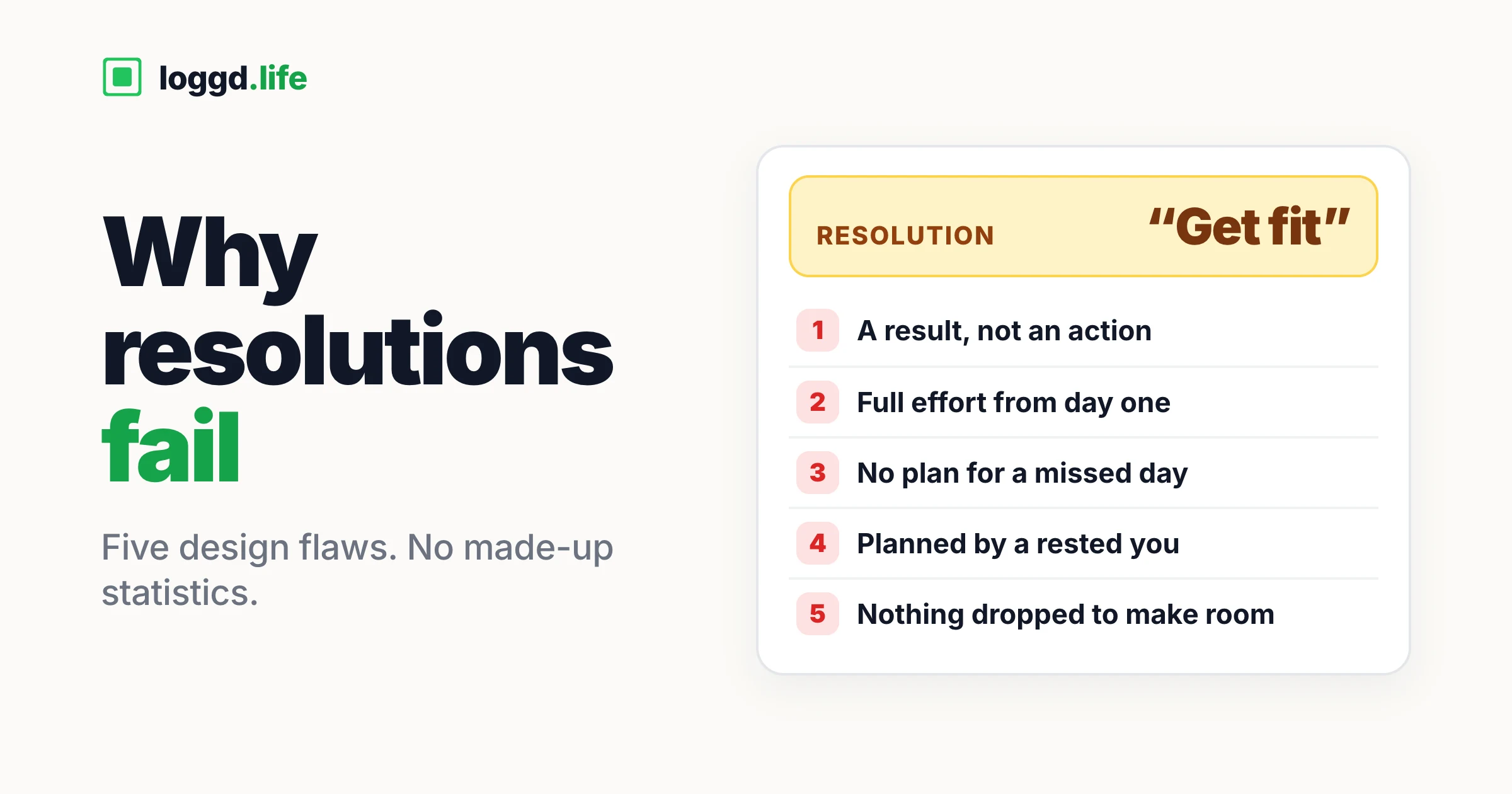
Almost every article on this topic opens with a failure percentage nobody can source. Here is what we can actually say about January commitments, and the five mechanics that really kill them.
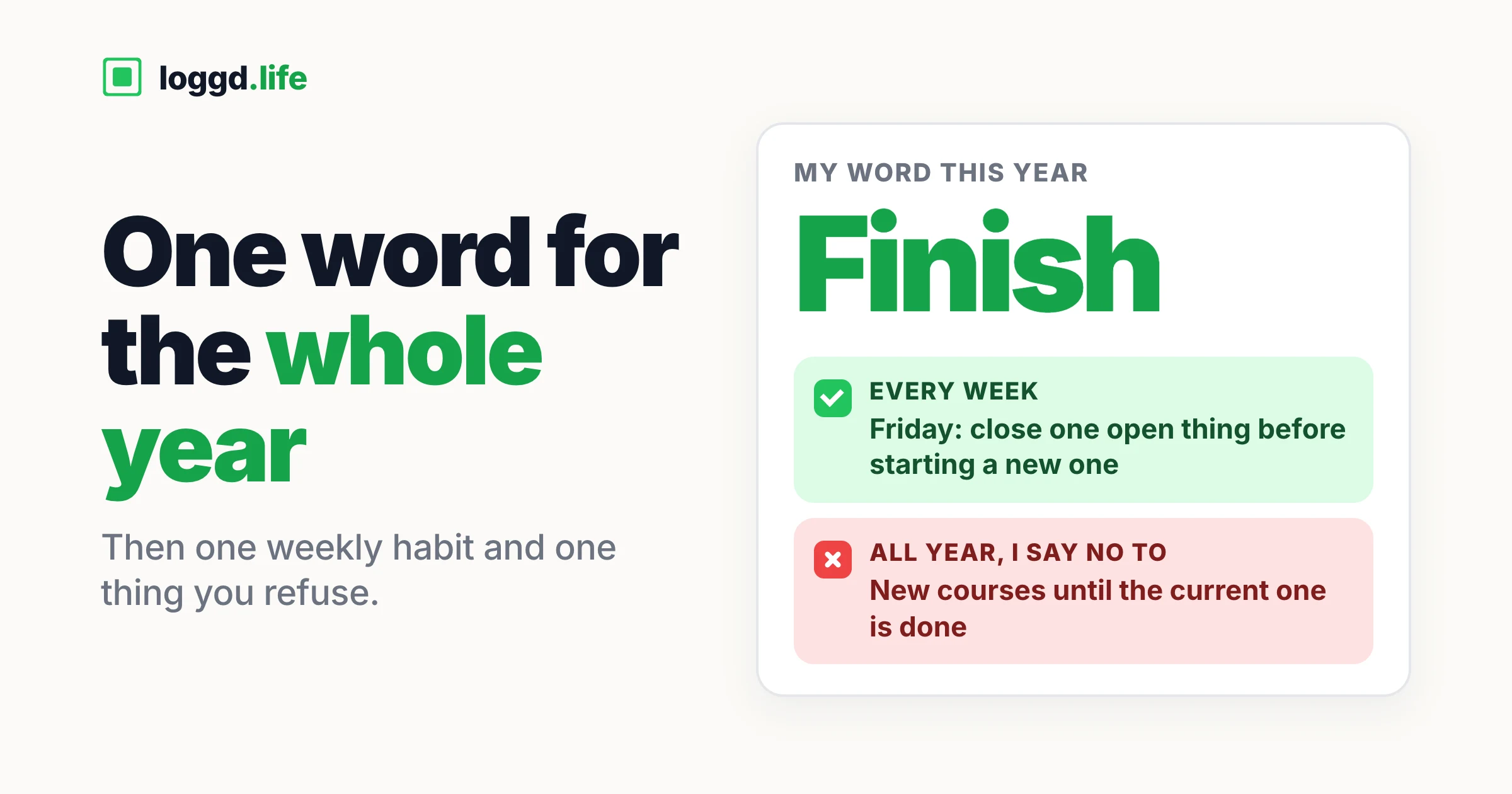
A theme instead of a resolution list, for people who have quit every January list they ever wrote. How to choose the word, a browsable set of candidates, and how to turn it into one commitment and one refusal.
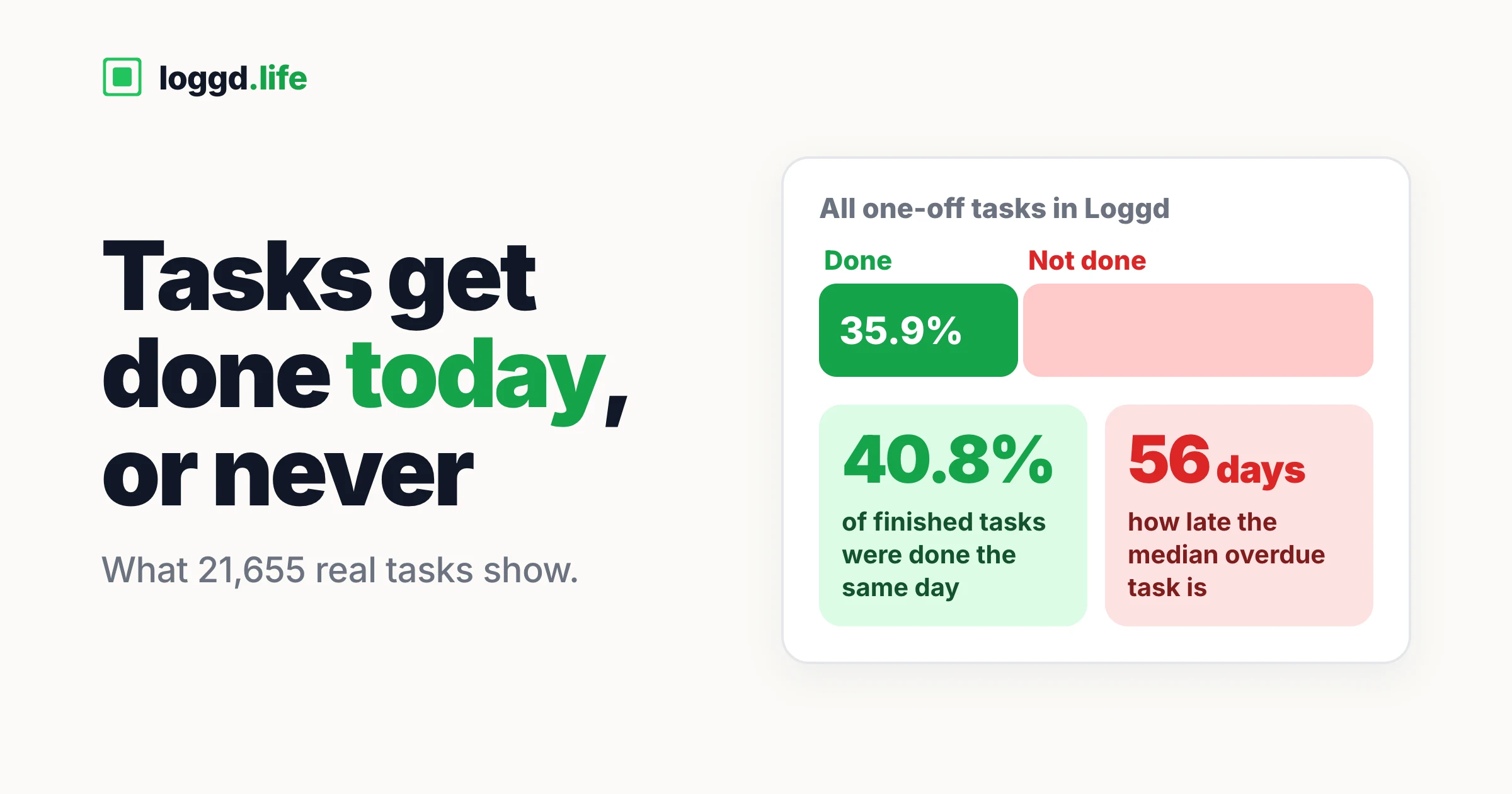
I counted every task in the Loggd database. Across 21,655 one-off tasks, 35.9% got completed, and the ones that did not are a median of 56 days overdue.
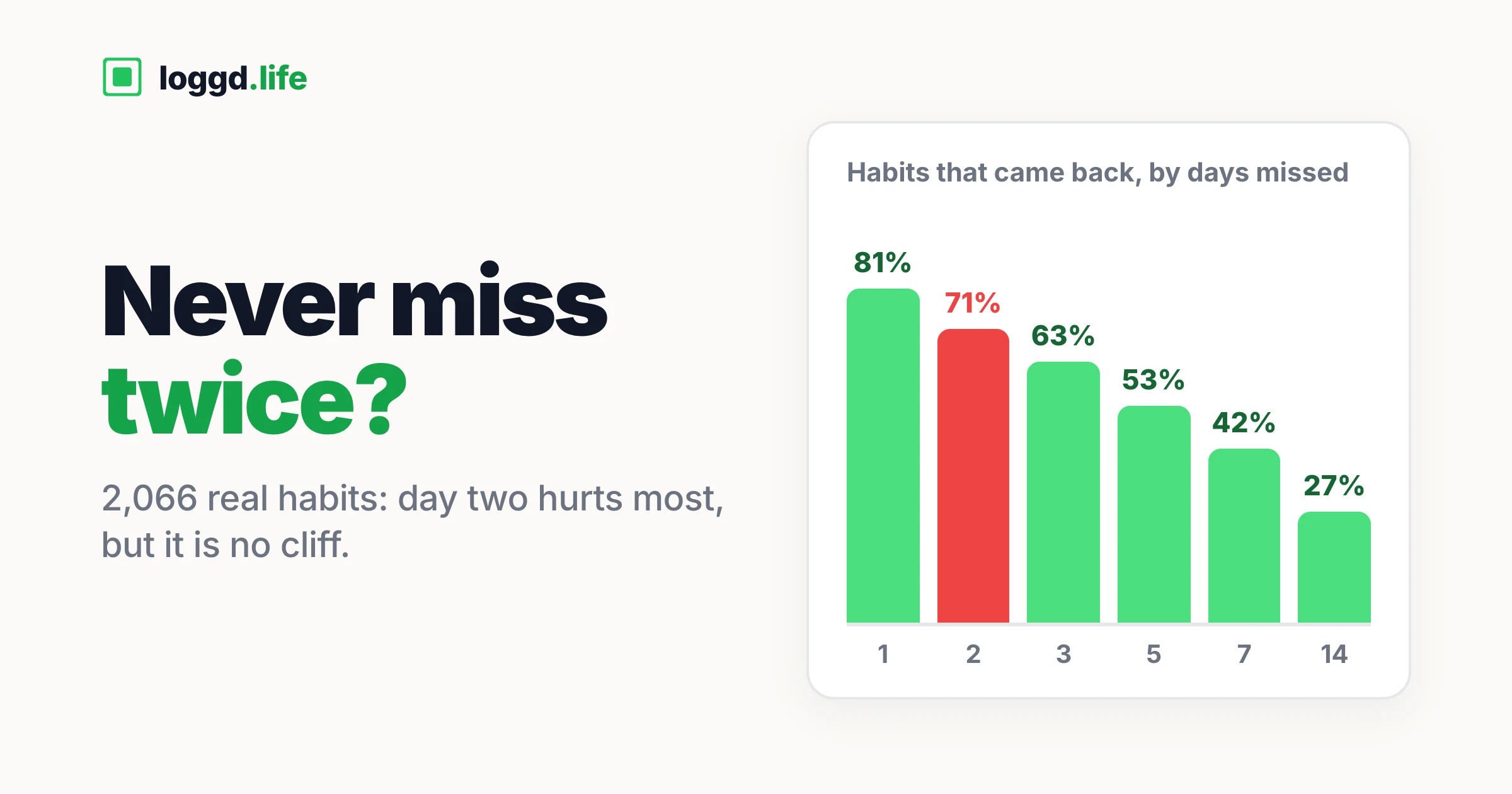
We measured the "never miss twice" rule against 2,066 real habits. The second missed day is the steepest single drop, but there is no cliff at two.
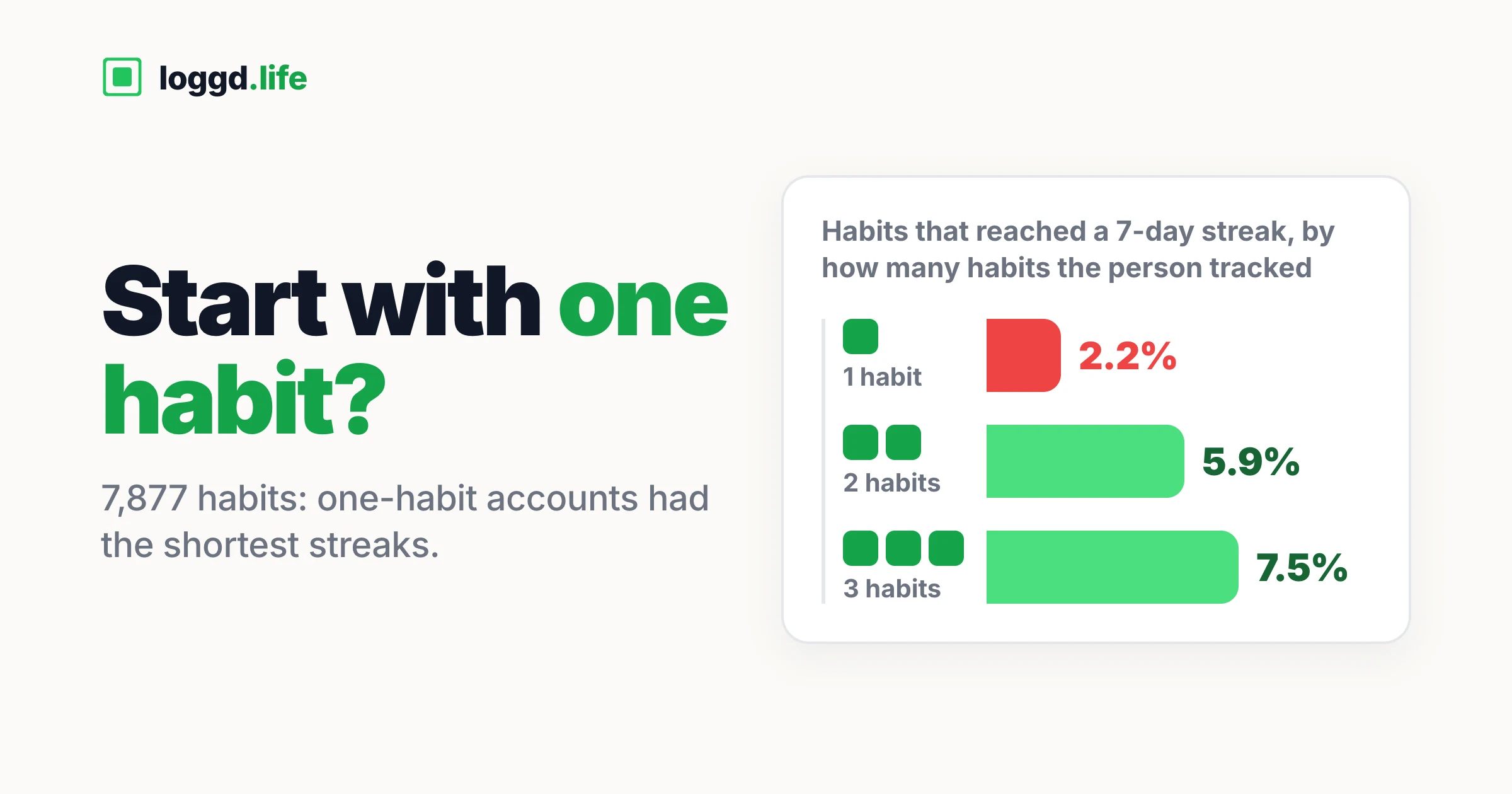
Everyone says start with one habit. Across 7,877 habits and 4,219 people, the one-habit accounts have the shortest streaks. Here is why that is not a reason to add more.
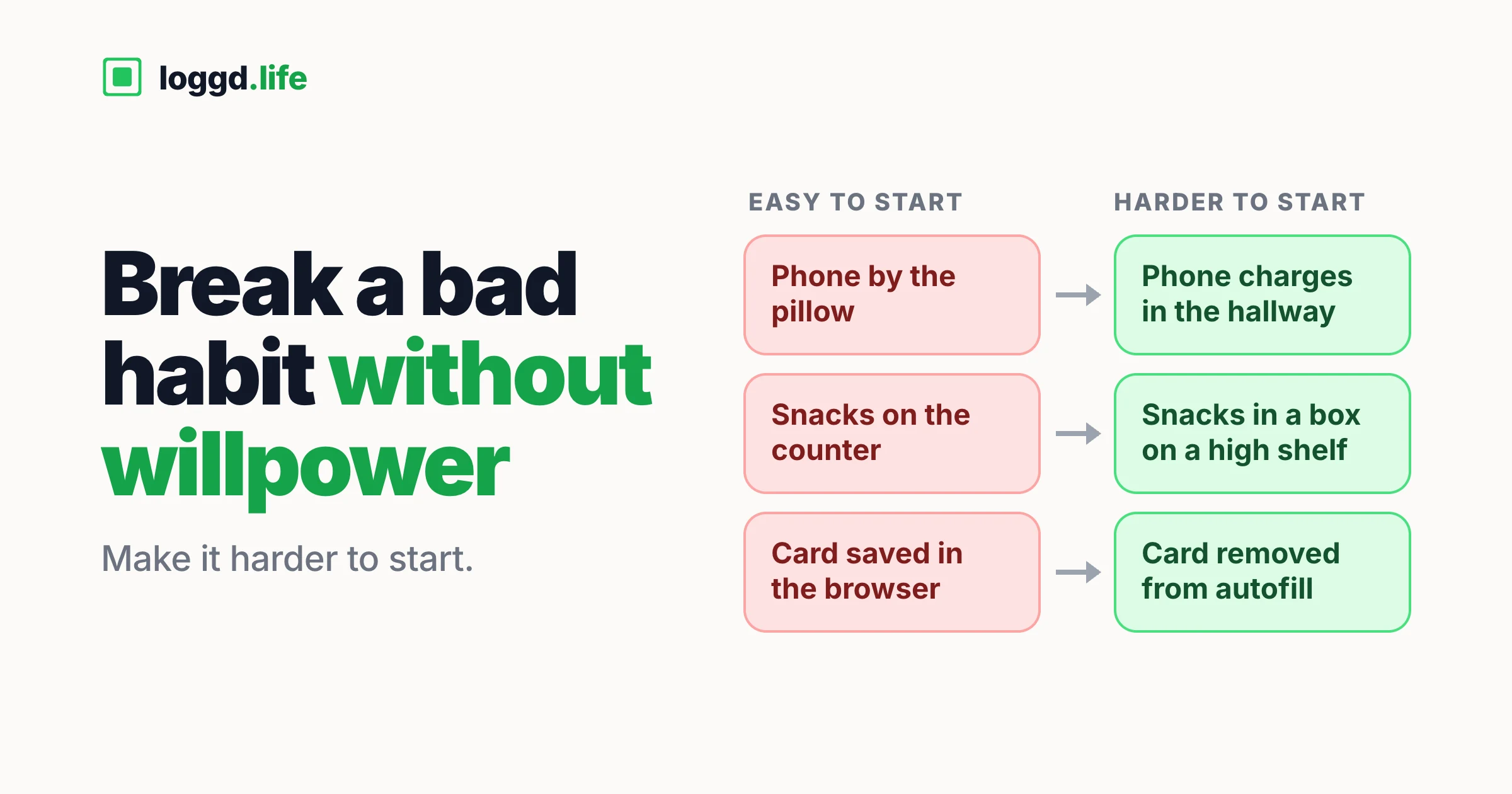
You cannot delete a behaviour that is still being cued and rewarded. Find the cue, raise the friction, pick the replacement in advance, and count clean days.
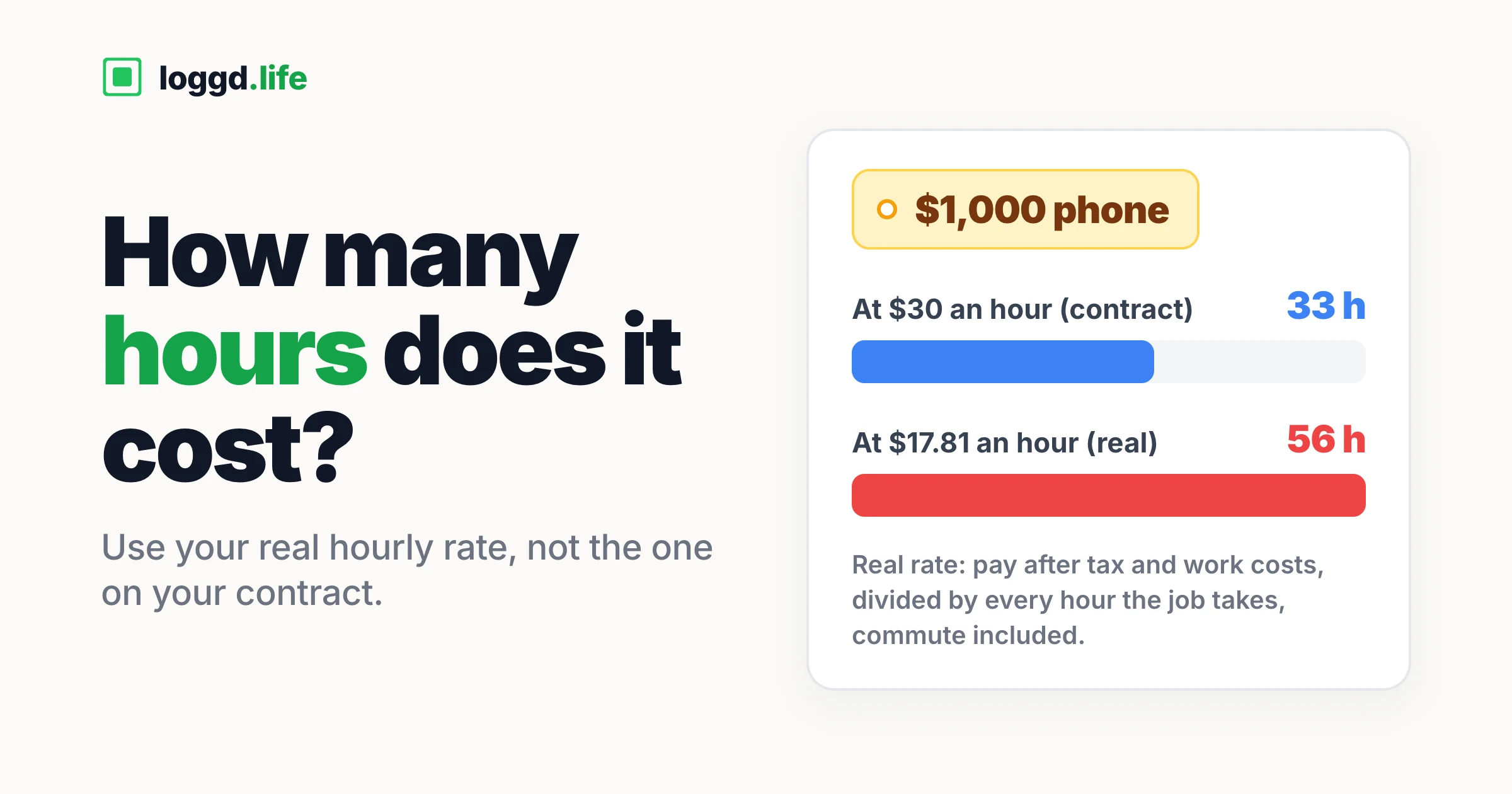
Converting a price into hours only works if you use your real hourly rate: after tax, after work costs, and across the unpaid hours the job actually takes. Then knowing when to stop.
No posts match ""
Track habits, manage tasks, set goals, and level up with gamification. All in one free app.
Start Free